
When Nature Puts On a Show. Exploring the Wonders of Costa Rica’s Tortuguero National Park

There are few better ways to arrive at your destination than by speedboat through a network of canals in one of the most beautiful countries in the world. In fact, other than a small plane, it is the ONLY way to arrive as roads don’t reach here. It is too remote.
Get a bus or take your hire car to La Pavona docks and catch a boat from there, or do as we did, organise a pick-up from your hotel in San José and let them take you door-to-door.
Our boat drops us off at Mawamba Lodge on the outskirts of Tortuguero village, and right on the edge of Tortuguero National Park. We are immediately confronted by an iguana so big I could have saddled it and ridden it to our canal-side bungalow.

Tortuguero gets its name from the Spanish word for turtle, Tortuga, as it is one of the most important nesting sites for the green turtle which comes ashore at night to lay its eggs during the season from July to October. But there are more than just turtles to see here. In a tree outside of our bungalow sits a colourful toucan, and behind us, a sloth has made a tree its temporary home. We often see it moving slowly through the branches searching out food, or simply a better spot to sleep. Howler monkeys also visit the hotel grounds, their haunting call providing an eerie soundscape.
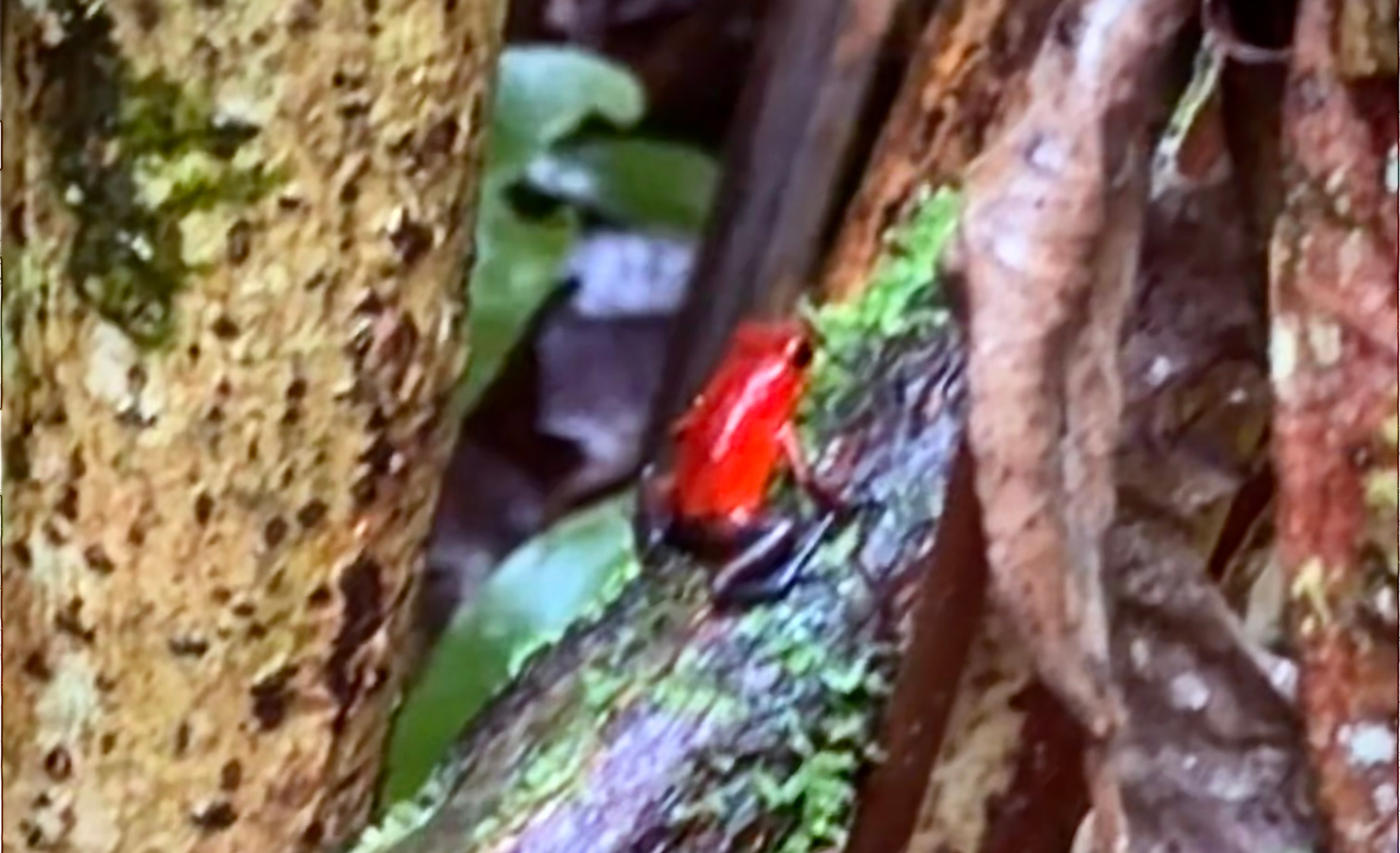
Outside of the hotel, the opportunities to see the local wildlife are plentiful. Whilst you can walk into the national park itself, after paying the entrance fee, hiring a guide will greatly enhance your experience. They will see things you simply will not, and provide a lot of background information. Tip: Just before the entrance, an enterprising local is hiring waterproof boots. It is good business, and well worth the few dollars. Our guide saw and identified a variety of bats, snakes, sloths, and to our amazement, anteaters climbing through the trees. The small but highly poisonous frogs are difficult to spot without the expert eye of a guide, but you are rewarded with brightly coloured characters, such as the blue-jeans frog, so called because its blue legs make it look like that is exactly what it is wearing.
Take an early morning (6 am) boat trip into the canals to see the wildlife as it wakes up. Be warned though, it is highly likely to be wet; this is a rainforest after all, but ponchos will be provided. Leaving early in the morning means you will encounter troops of monkeys, basilisk lizards, iguanas perched high in the trees, spiders, and white-faced capuchin monkeys. We also were delighted to spot a huge crocodile and river dolphins during our tours. You can book your tour in one of the many tour operators in the village. (We used Tuanis Tours who were excellent.)

A night tour is not to be missed. We were so impressed with our guide that we booked with Tuanis Tours again. Although it followed the small path that takes us to our hotel, it comes alive at night. Snakes, frogs, kinkajous, and spiders are all pointed out by knowledgeable guides with torches that seem to be able to pick out wildlife in the pitch blackness.
Tortuguero Village itself has a number of small restaurants and ‘Sodas’, the more informal and cheaper restaurants, offering simple dishes for those who, like us, were not eating in their hotel.
Tortuguero is an experience from getting there to leaving. Allow two or three full days to get the most of your time there. And don’t forget your camera!


Comments